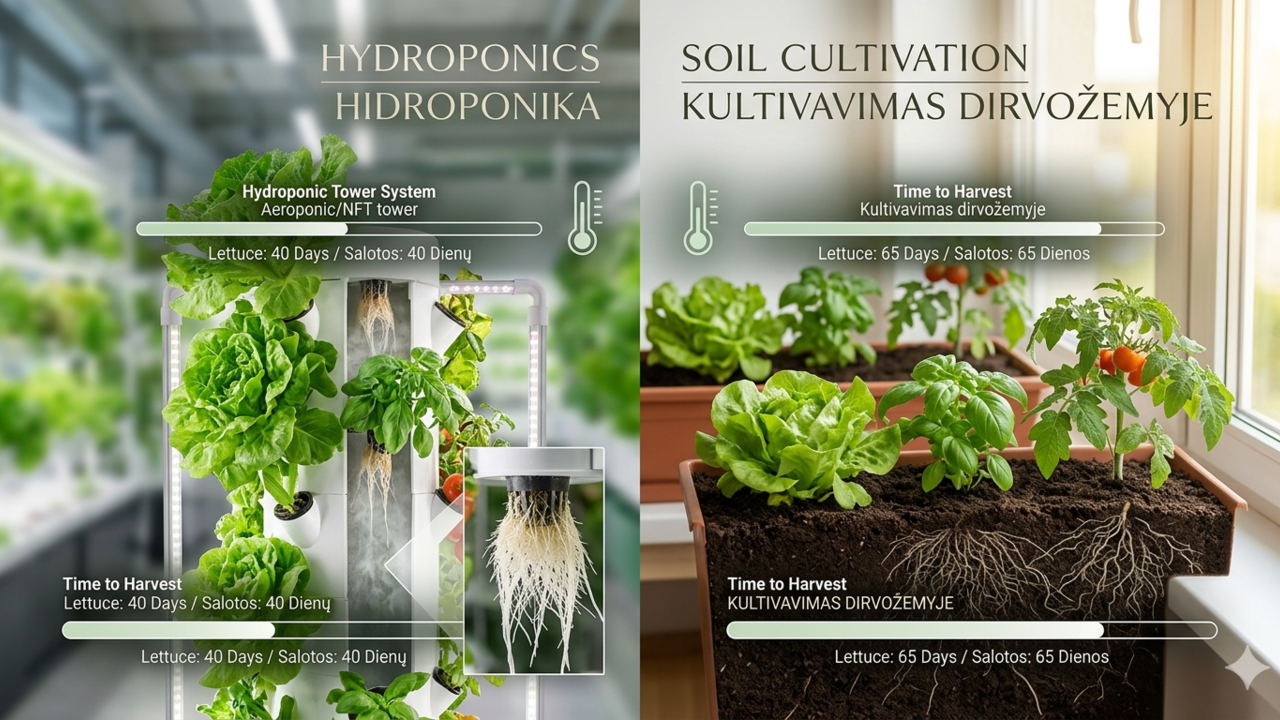
If you are involved in modern agriculture or urban gardening, you’ve likely heard about the staggering growth speeds of hydroponic systems. The difference in harvest time between soil and water-based cultivation isn't just a claim—it is a direct result of how plants access vital resources.
1. Eliminating the "Struggle for Survival"
In soil, plant roots must grow deep and wide to "search" for nutrients and water. This means a significant portion of the plant's energy is spent on root expansion rather than foliage and fruit.
In a Hydroponic setup, nutrients are dissolved in water and delivered directly to the roots. Since the food is "served on a silver platter," the plant redirects its energy to rapid upward growth and production.
2. Oxygenation: Fueling the Roots
Soil can become compacted, leading to low oxygen levels and "suffocating" the roots. Hydroponic systems ensure roots stay highly oxygenated. More oxygen translates to more efficient nutrient uptake and, consequently, a much shorter growth cycle.
3. Growth Timeline Comparison
On average, plants in a hydroponic system grow 30% to 50% faster than those in soil:
Lettuce: Soil takes about 60–70 days, while Hydroponics takes only 35–45 days.
Tomatoes: Soil requires 90–110 days, compared to just 60–80 days in hydroponics.
Basil: Usually takes 45–50 days in soil, but reaches full harvest in just 25–30 days.
Cucumbers: Soil takes 50–60 days, whereas hydroponic systems deliver results in 35–40 days.
4. Precision Control
Hydroponics allows you to be the commander of your environment. You can adjust pH levels and nutrient concentration to match the plant's exact needs. In soil, nutrients can get "locked" and become unavailable, but in hydroponics, the plant receives exactly what it needs every second.
Conclusion
For those looking for maximum efficiency and year-round harvests—especially in modern vertical hydroponic towers—this method is the clear winner. Faster growth means more harvest cycles per year, leading to quicker ROI and higher productivity in smaller spaces.